The Numbers Don’t Lie: Plant-Based Meat’s Epic Failure
Beyond Meat’s stock cratering 78% in 2025 tells the whole story. Sales plummeted to $343 million as consumers finally admitted what kitchen professionals knew all along: these products taste like cardboard wrapped in marketing budgets. I’ve watched restaurants struggle to move Beyond burgers even with aggressive pricing. The texture falls apart on the grill. The flavor profile screams “processed.” The ingredient list reads like a chemistry experiment.

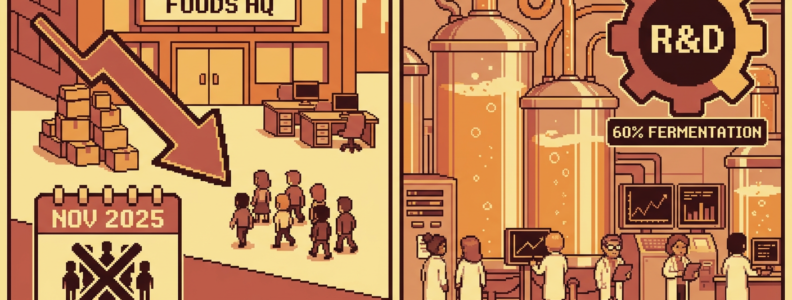
Impossible Foods got the message loud and clear. They axed 340 employees in November 2025 and pivoted hard, shifting 60% of their R&D budget toward fermentation technology. Smart move. When a company that raised hundreds of millions admits their core product isn’t working, you listen. The writing was on every restaurant wall where these patties sat unsold under heat lamps.
The broader market data confirms what any chef worth their salt could have predicted. Good Food Institute’s 2026 alternative protein report shows plant-based meat sales declined 41% while fermented proteins exploded 312%. That’s not a trend. That’s a complete market realignment.
Why Plant-Based Meat Never Stood a Chance
Here’s the brutal truth from someone who’s broken down hundreds of protein sources: plant-based meat companies tried to fake their way through fundamental food science. They took pea protein, potato starch, and coconut oil, then added methylcellulose and artificial flavors to mimic beef. The result? Expensive disappointment that falls apart when you actually cook with it.
The texture problem is insurmountable. Real meat gets its structure from interconnected muscle fibers. Plant proteins don’t bind the same way, no matter how much gum and starch you add. I’ve tested these products in professional kitchens. They don’t brown properly. They release weird amounts of water. They develop an off-putting rubbery texture that screams “fake food” to anyone with functioning taste buds.
Cost became the final nail in the coffin. Beyond burgers retail for $8.99 per pound while ground chuck sits at $5.99. Restaurant margins couldn’t justify the premium when customers weren’t reordering. The value proposition collapsed because the product never delivered on its basic promise: tasting good.
Fermentation: The Technology That Actually Works
Fermentation is everything plant-based meat pretended to be: innovative, scalable, and actually delicious. Companies like Perfect Day proved the concept by engineering yeast to produce real dairy proteins without cows. Their fermented whey protein saw 445% growth in food service applications because it performs exactly like traditional dairy in professional kitchens.
The science makes sense. Fermentation creates actual proteins with proper molecular structures, not approximations cobbled together from plant fragments. Perfect Day’s fermentation growth data shows how precision fermentation delivers consistent quality at scale. When you engineer microorganisms to produce specific proteins, you get reliable results every single time.
MycoTechnology cracked the code with mushroom-based proteins that actually enhance flavor instead of masking it. They landed contracts with 23 major restaurant chains in Q1 2026 because their products solve real kitchen problems. Their fermented proteins add umami depth while providing complete amino acid profiles. That’s the kind of functionality that keeps chefs coming back.
The Economics of Better Food Science
Fermentation economics blow plant-based meat out of the water. Production costs drop dramatically when you’re not processing tons of raw plant material through complex mechanical systems. Fermentation tanks require smaller footprints and produce higher yields per square foot than traditional protein processing facilities.
Quality control becomes predictable. Batch consistency improves when microorganisms follow programmed biological processes instead of relying on agricultural variables like weather, soil conditions, and harvest timing. Restaurants prize consistency above almost everything else. Fermented proteins deliver it.
The supply chain advantages are massive. Fermentation facilities can be located anywhere, eliminating transportation costs and storage complications that plague plant-based meat companies. No more shipping frozen patties across continents or managing complex cold storage networks that eat into already thin margins.
What This Means for Your Kitchen and Wallet
The fermentation revolution is already hitting restaurant menus and grocery shelves. Smart food companies are pivoting away from expensive plant-based meat alternatives toward fermented proteins that actually improve dishes instead of just replacing ingredients. You’re seeing mushroom-fermented umami boosters, precision-fermented dairy proteins, and engineered flavor compounds that enhance rather than substitute.
For home cooks, this shift means better products at better prices. Fermented proteins integrate into existing recipes without the weird texture compromises that made plant-based meat such a kitchen nightmare. You can actually cook with these ingredients using normal techniques and get predictable results.
The $47 billion plant-based meat bubble taught the food industry a lesson: consumers won’t accept inferior products just because they align with environmental values. Fermentation delivers on both fronts, providing sustainable protein sources that actually taste good and perform properly in real kitchens.
Have you tried any fermented protein products yet? I’m curious about your experiences with these newer alternatives compared to the plant-based meat products that dominated headlines for the past few years.